
Chilton County Municipal Court Warrants
Municipal courts in Chilton County keep their own files. Those files cover city ordinance violations, municipal misdemeanors, and municipal traffic tickets. A municipal judge or magistrate can issue warrants tied only to those cases. The record sits apart from the Circuit Court criminal file, the District Court matter, and the sheriff's public programs. That split is why a county-level search may miss a Clanton, Jemison, Thorsby, or Maplesville order entirely. The wording takes care, too. The Unified Judicial System forms index titles its failure-to-appear form an "Alias Warrant of Arrest for Failure of Defendant to Appear." An alias warrant is an arrest writ that follows a missed court date. State law uses "bench warrant" in a narrower setting, though local staff often say it loosely. Ask the municipal clerk for the exact title of the order rather than assuming the two terms match.
Clanton Municipal Warrants in Chilton County
Clanton Municipal Court publishes the most detailed city process in Chilton County. It hears motor vehicle and traffic violations, criminal misdemeanors, and ordinance cases inside city limits. The office sits at 601 1st Avenue and answers 205-755-6669 on weekdays from 8 a.m. to 4:30 p.m. Traffic and misdemeanor court convenes Tuesday at 1 p.m. The court's own warnings deserve attention. Arriving late or failing to appear can bring contempt, incarceration, a warrant, fines, and bond revocation. Unpaid traffic citations go to the judge, who issues a bench warrant and requests driver-license suspension. Eligible tickets may be paid in person, by mail, or through the official portal, with payment received at least 24 hours before court for proper credit. If an order may already exist, call first. Ask whether payment is still available, whether appearance is now required, and how the court records a recall or reset. The wider Chilton County traffic warrant process turns on that same court compliance.
Chilton County Cities With Municipal Courts
Four incorporated places in Chilton County run municipal courts. Their access paths are not interchangeable. Clanton publishes a full court page. Maplesville offers a specific case search. Jemison's city portal carries no warrant-search feature. Thorsby routes questions straight to its court and police.
| City | Municipal Court Channel | Warrant Types or Case Scope | Phone |
|---|---|---|---|
| Clanton | Municipal Court and payment portal | City traffic, misdemeanor, ordinance, FTA | 205-755-6669 |
| Jemison | Official municipal portal and direct contact | City citation and court status; warrant fields unverified | 205-688-4491 |
| Thorsby | Town/Court at 20688 US 31 | City case and appearance-order confirmation | 205-646-3575 |
| Maplesville | Municipal citation or case lookup | City citation or case search; warrant result unverified | 334-366-4211 |
If a city says the matter was transferred or bound over, ask which court received the file. Chilton County Circuit criminal cases use the clerk at 205-755-4275, option 2. District criminal uses option 1.
Maplesville Municipal Warrants in Chilton County
Maplesville gives Chilton County residents two ways to query its court. The Municipal Court of Maplesville search offers Search By Citation Number, which asks for Last Name plus a Citation Number or Case Number, and Search By Birthday, which asks for Last Name plus Date of Birth. Each path has a Search button. The form does not say whether every field is required or whether partial names work. Use it for your own case or an immediate family member's matter, then call 334-366-4211. A match does not confirm warrant status, bond, a next setting, recall, or payment eligibility. A blank result also cannot prove that no Maplesville order exists. For that answer in Chilton County, the court itself is the source.
Portal limit: A municipal citation or case match is not the same as formal confirmation of a current arrest order.
Checking a Municipal Court Warrant
Begin with the city in Chilton County that issued the citation or complaint. Gather the full legal name used in court, date of birth, citation or case number, approximate date, and issuing police agency. Keep the inquiry narrow. Ask about your own file or a close family member's matter, and request only the details the next step needs.
- Use Maplesville's verified citation search or the Clanton and Jemison municipal portals only for their stated city functions.
- Call the city clerk to ask whether the case is open, a setting was missed, an order now requires appearance or arrest, and payment is still allowed.
- Contact the city police route when the clerk directs it. Thorsby Police is 205-646-3555, while county dispatch is 205-755-1120 after hours.
- Review the Sheriff's curated Most Wanted page only as a limited outreach list, never as a full city-warrant search.
- Use the Sheriff's records-request form for a narrow releasable document, not urgent status confirmation. A $20 minimum is reported.
- Visit a clerk counter only after confirming current hours, entry rules, case status, and whether the court or police office is the correct destination.
Alabama offers no public statewide active-warrant name search. An ALEA personal criminal-history review is a separate fingerprint, ID, application, and fee process, not a live municipal warrant check. In Chilton County, the city court remains the answering office.
Chilton County Municipal Warrant Portal Gaps
ALEA and the Alabama Justice Information Commission run systems for authorized criminal-justice agencies, not for public searching. Alabama law makes agencies report unserved arrest warrants and later notify the state when those orders are served or withdrawn. None of that creates a public search box for Chilton County city cases. The official ALEA and AJIC overview lays out that agency information layer.
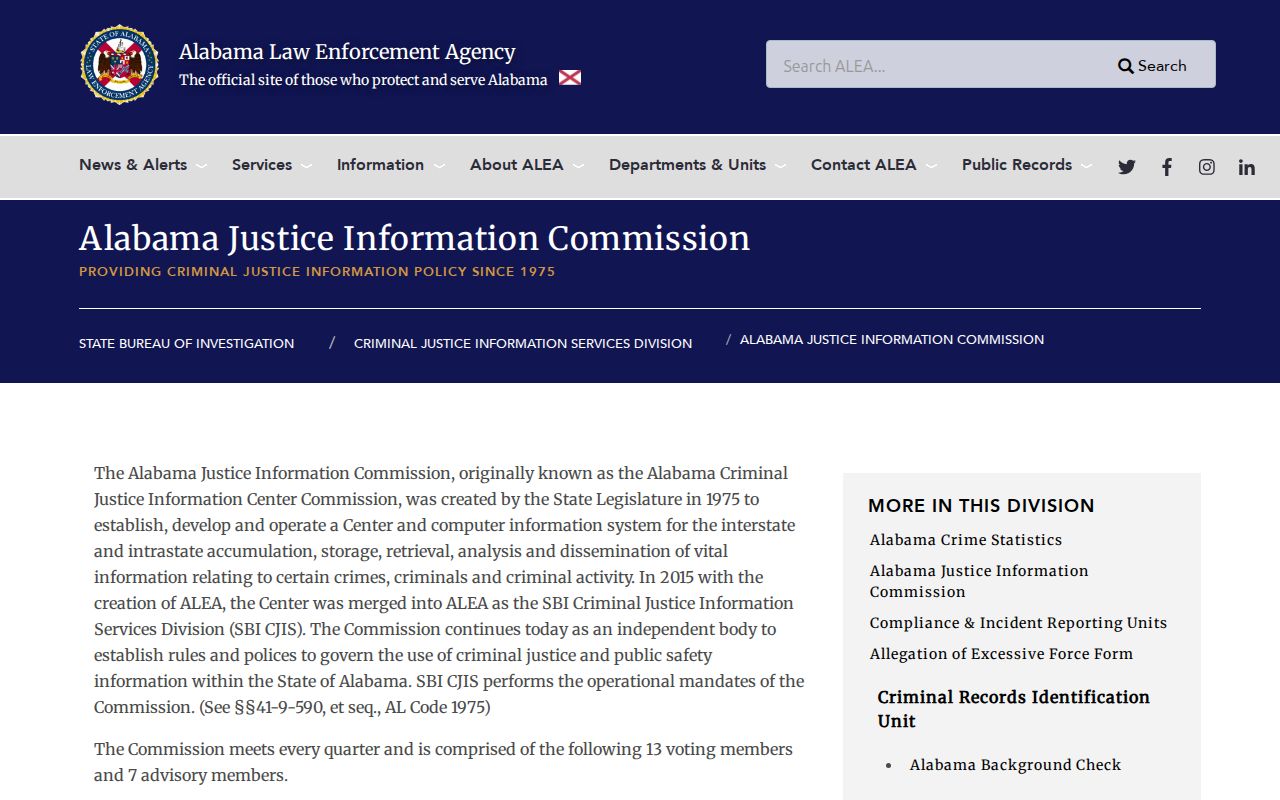
The same limit applies locally. Confirm a city order through the issuing municipal court in Chilton County. Jemison's portal carries no warrant-search fields, and Thorsby posts no official portal at all. Call Jemison at 205-688-4491 or Thorsby Town/Court at 205-646-3575. A missing public result is not a legal status. Only the issuing court can confirm the order.
Inside a Municipal Court Warrant
When Chilton County confirms a warrant, the entry should connect a named person to a specific charge, a court, and a current status. Alabama Rule 3.2 spells out what an arrest warrant must contain. It identifies the defendant or gives a sufficient description, names the charged offense, and commands arrest and production before the named judicial officer. If the order is bailable, recognizance or bond terms may appear on its face. Court entries can go further, recording issue, return, service, recall, and any future setting.
| Case or Warrant Number | The court's identifier, shown as city-assigned number; no common Chilton municipal format was verified. |
|---|---|
| Charge or Citation | The traffic, misdemeanor, ordinance, or appearance matter tied to the city case. |
| Issuing Court | The municipal court that can verify status and control recall or settings. |
| Bond or Fine | Only the current sum or conditions stated by the court, when applicable. |
| Status | Active, served, returned, or recalled only when the responsible holder confirms it. |
A Chilton County portal may show fewer fields than the paper file. Fill no gaps from an old social post, a similar name, or a general schedule; the missing value stays unconfirmed until the court itself supplies it.
Chilton County Municipal Warrant Bond Limits
Bond in Chilton County secures release and a future court date, nothing more. It does not end the municipal charge or prove the warrant was recalled. Amounts and accepted forms vary case by case. Before you travel or pay, check with the city court, the jail, and the order itself. The Alabama right-to-bail statute sets the pretrial baseline, subject to its legal exceptions.
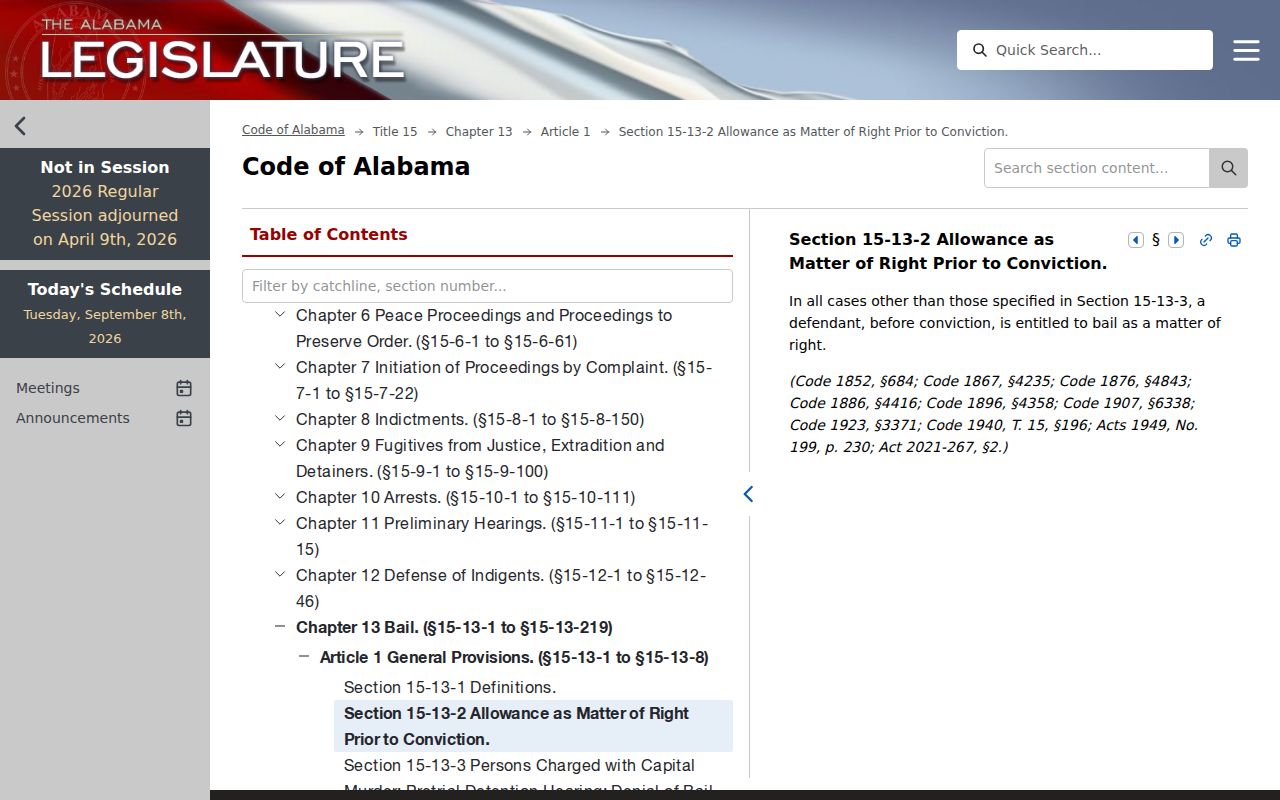
That statute promises no release, no fixed amount, and no single bond method for every municipal order. The Alabama statutory purpose of bail is simply to secure the accused person's appearance in Chilton County and elsewhere.
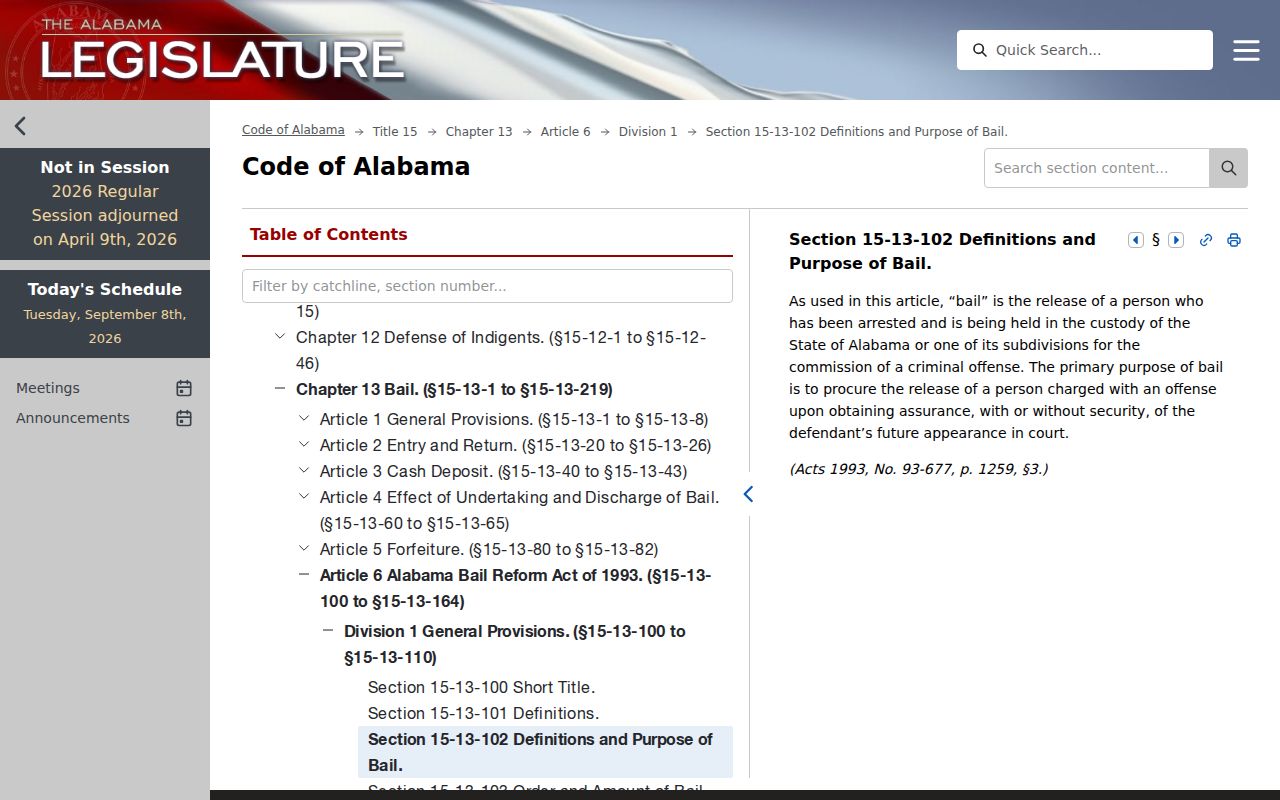
That is why posting bond never disposes of a citation, an ordinance charge, a missed setting, or any other city case. The charge still moves forward. When custody is involved, Chilton County facts offer three possible channels. Cash bond goes through the Circuit Clerk on the courthouse third floor during weekday hours. Property bond runs through the jail at three times the stated bond, at all hours. A professional bond company is the third route. A municipal caller still has to ask whether any county channel applies to the specific city order.
How to Resolve a Municipal Court Warrant
Resolution stays with the issuing city court in Chilton County unless staff confirms a transfer. The county runs no walk-in surrender program, safe-surrender event, or automatic recall process. A lawyer can ask the judge to recall, quash, or reinstate the warrant, or set an agreed appearance. Recall means the judge withdraws the order; quash means the court sets it aside entirely.
- Confirm the exact order, city case number, charge, status, next setting, and any bond with the municipal clerk.
- Ask whether payment is still eligible, whether a judge requires an appearance, and whether counsel must file a motion.
- Confirm the accepted payment or bond channel and all current travel instructions before going to a court, police office, or jail.
- After action, obtain a receipt or written order and ask the court to confirm both current status and the next court date.
Resolution caution: Paying through a city portal does not by itself prove that an issued municipal warrant has been recalled.
Clanton's payment rules cover only eligible Clanton matters. Maplesville's form is a case-search route, not a recall policy. Jemison and Thorsby publish no comparable payment or recall policy, so a Chilton County caller must ask the city court directly.
Chilton County Municipal Warrant Aftercare
After a Chilton County city court acts, keep the order, the receipt, and the new setting date. A recalled municipal warrant does not erase the underlying court file. Dismissal, acquittal, diversion, payment, or another outcome can each affect records differently. Expungement is a separate statutory court process for some qualifying Alabama records. It is not an immediate warrant remedy. The Alabama expungement eligibility statute describes routes for certain misdemeanor, violation, traffic, and municipal matters after specified outcomes.
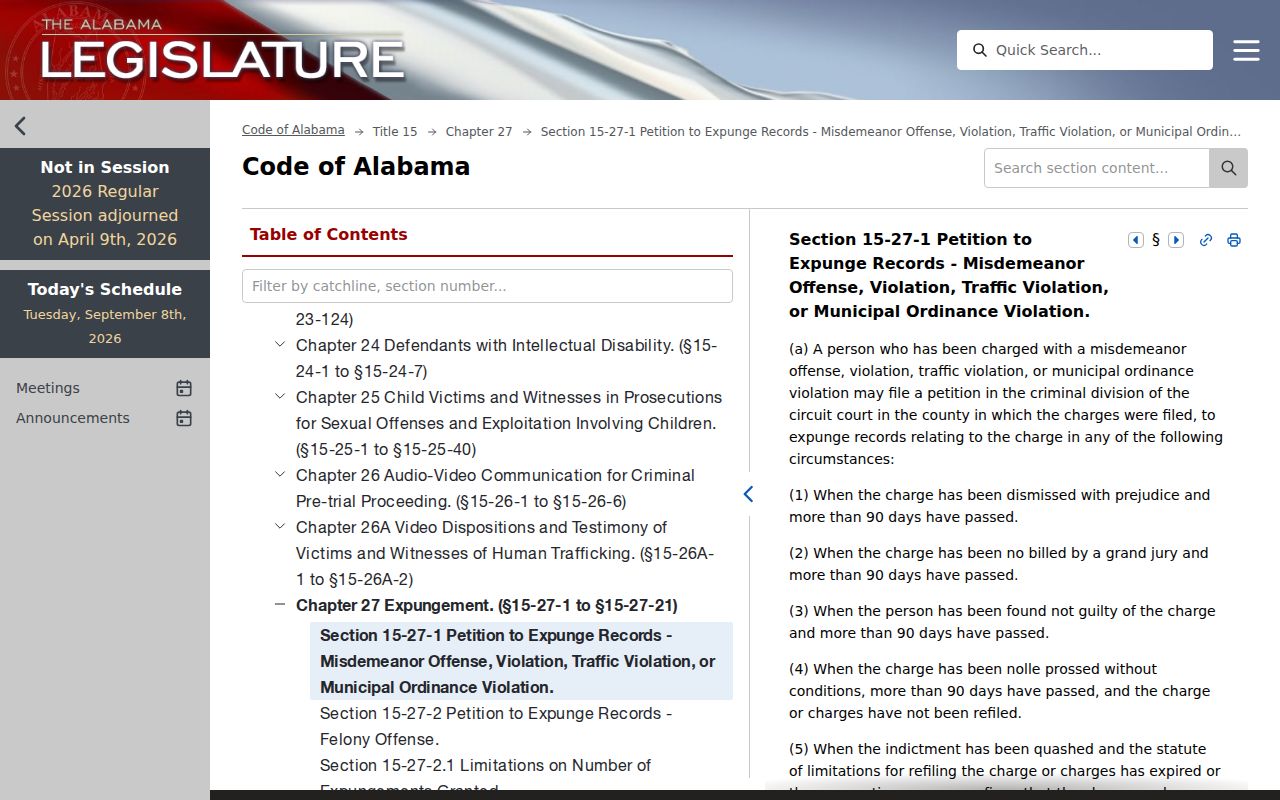
The statute speaks to a post-case question. It never promises that a recalled warrant or a paid ticket qualifies. Public access has limits too. The Alabama Open Records Law gives residents a general inspection and copy right, though juvenile, youthful-offender, sealed, expunged, investigative, and safety-sensitive records can be restricted. A denied request, a missing portal result, or a closed file does not prove that no Chilton County warrant ever existed.